
Daniel Zubal
Born To MUV Publication
Client: Ultimuv
Year: 2020
Scope: Visual Design, Information Design
Read Time: 4 minutes
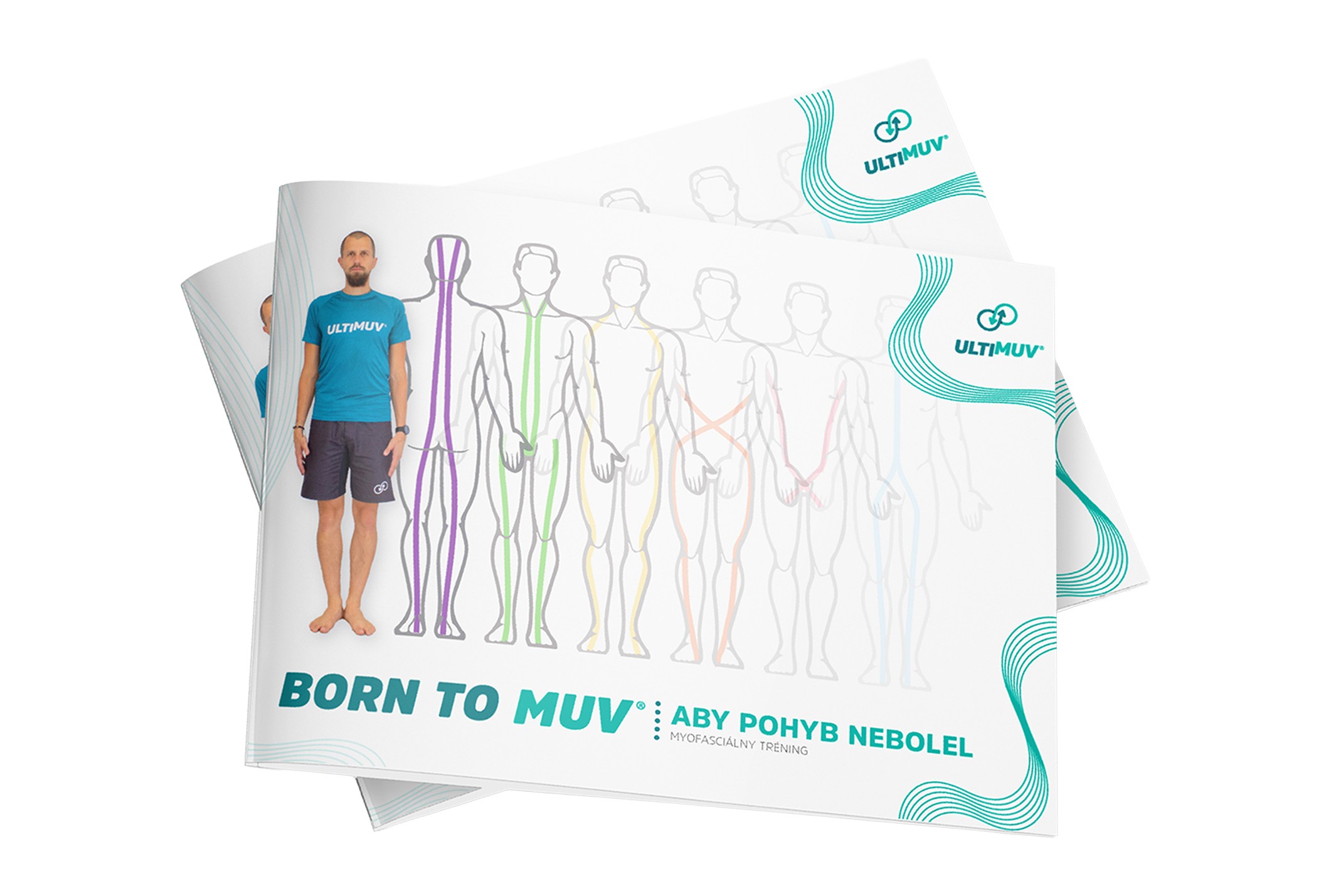
Overview: Born To MUV was a printed movement guide created at Ultimuv, a network of physiotherapy and sports centers in Slovakia. The goal of the project was to translate complex physiotherapy and myofascial training principles into a clear, usable format that everyday people could understand and apply on their own.
The publication was designed as a complementary tool to in-center training, helping clients continue exercising correctly at home, at work, or throughout the day without constant supervision.
I worked as the sole designer on the project, collaborating closely with the head physiotherapist, professional trainers, a marketing lead, and a copywriter.
The Problem
Ultimuv already worked with advanced physiotherapy concepts such as myofascial lines, tensegrity, and functional movement patterns. While these principles were effective in guided sessions, they were difficult to communicate outside the centers.
The main challenges were:
• High complexity: Expert-level physiotherapy knowledge was hard for non-professionals to understand.
• Limited transferability: Existing videos and materials did not explain the full system behind the exercises.
• Usability for everyday people: Clients needed a way to exercise correctly without a trainer present.
• Wide audience: The guide had to work for younger users as well as older people with lower digital confidence.
The core challenge was not creating new exercises, but making an expert system usable for the general public.
The Challenge
The goal was to design a movement guide that:
• Translates complex physiotherapy concepts into simple, human-readable language
• Clearly connects written instructions with body movement
• Works as a low-barrier tool for all age groups
• Supports daily use at home, at work, or during breaks
• Complements in-center training rather than replacing it
Why Print?
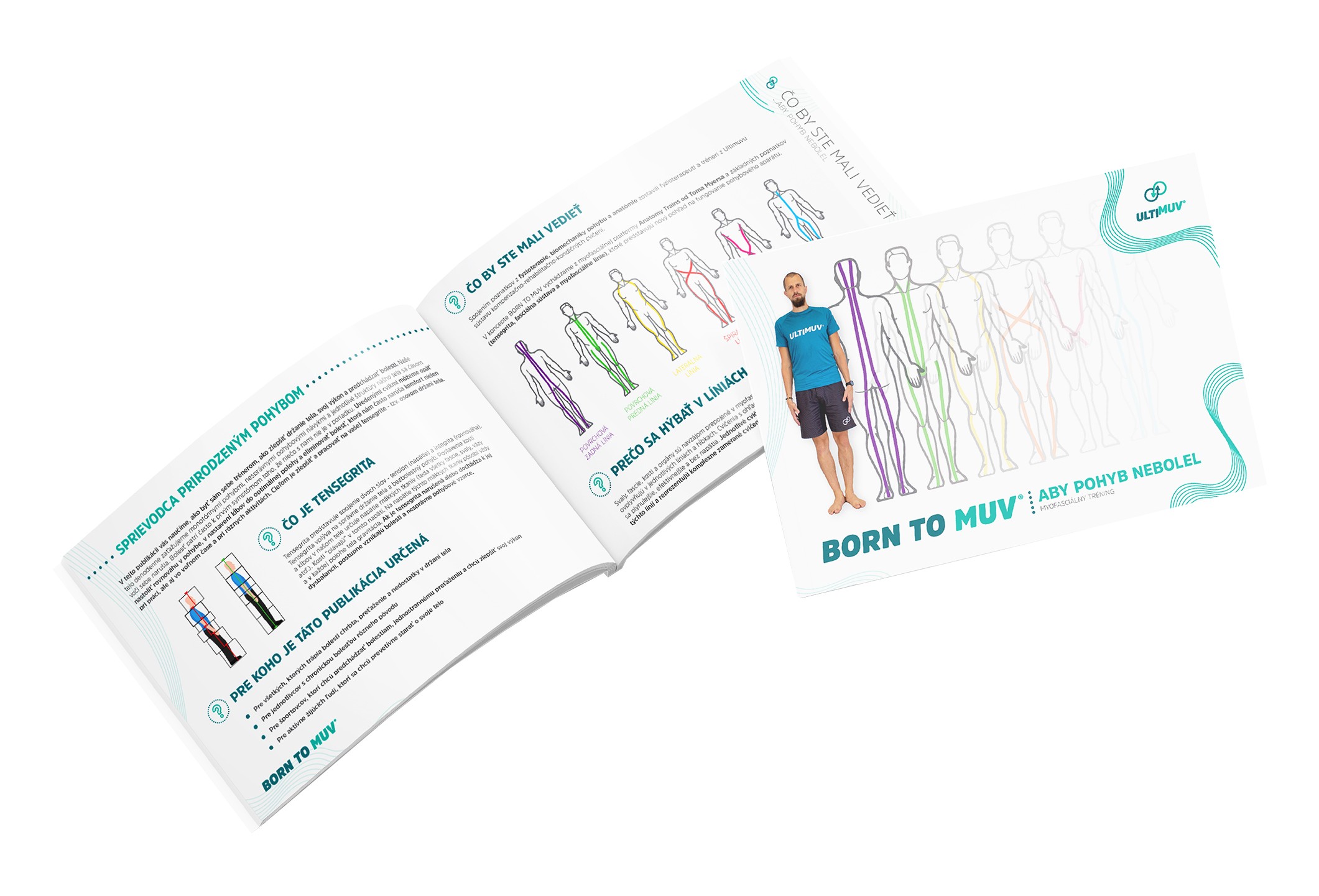
Choosing a printed format was a conscious design decision.
Print allowed us to:
• Launch quickly without the complexity of an app or platform
• Create a low-barrier tool accessible to older users
• Offer a distraction-free experience focused on movement
• Enable flexible use, users could keep the guide at home, at work, or photograph pages for mobile use
The printed guide became the most inclusive format for the widest audience.
Research & Collaboration
The exercise system itself was developed by Ultimuv’s team of physiotherapists and professional trainers, based on the Anatomy Trains methodology by Tom Myers.
My role within the team was to:
• Continuously question clarity and comprehensibility
• Translate expert language into visually and structurally understandable content
• Acknowledge where non-expert users might get confused or misinterpret instructions
This required close collaboration between design, marketing, copywriting, and physiotherapy experts throughout the project.
Design & Information Structure
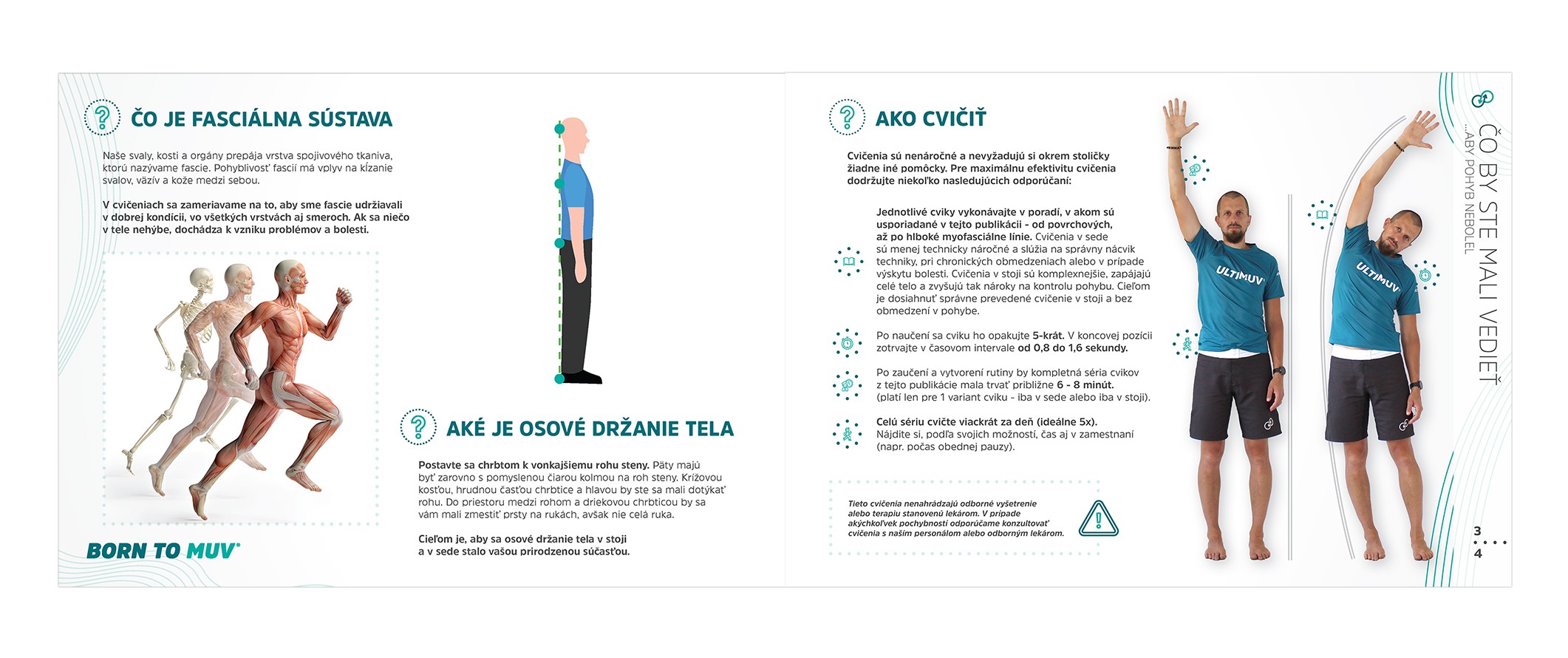
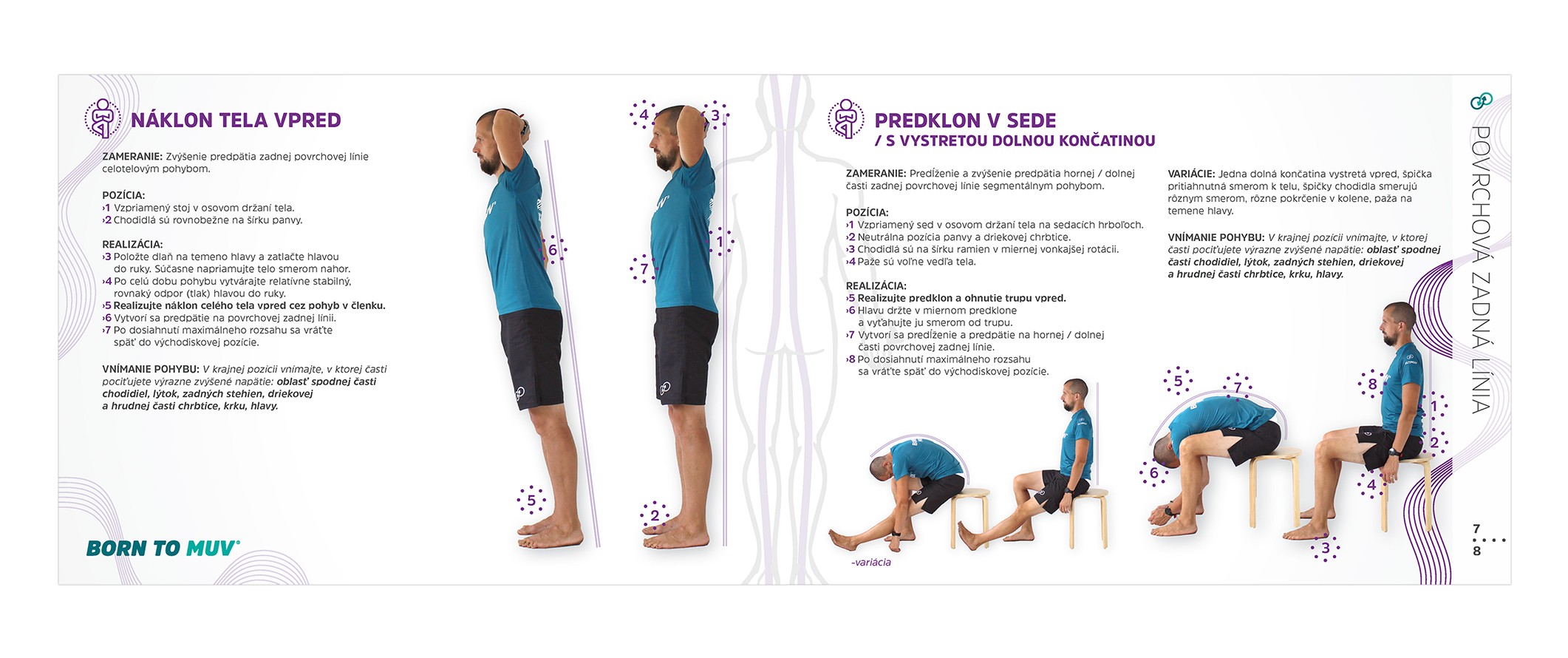
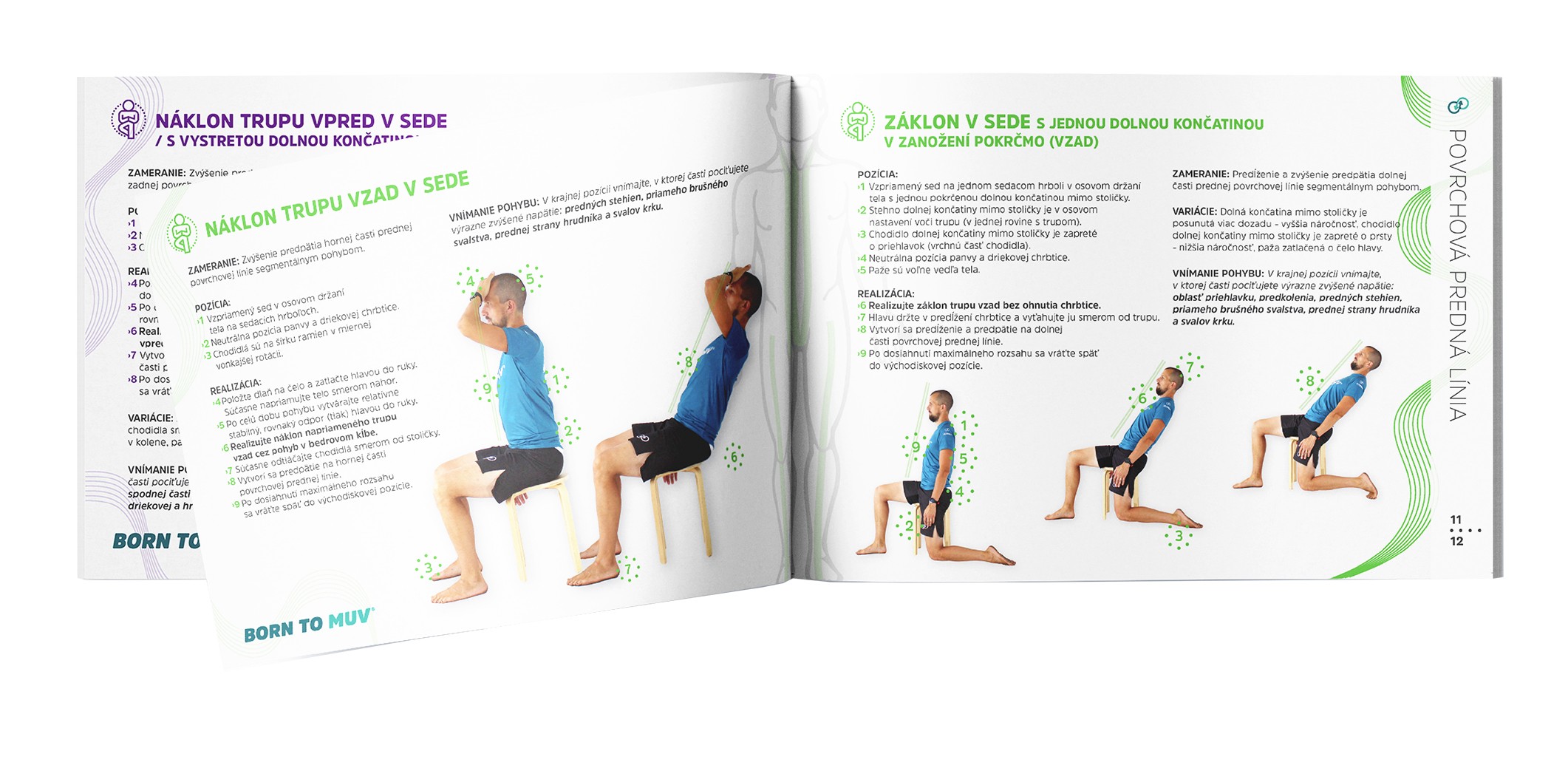
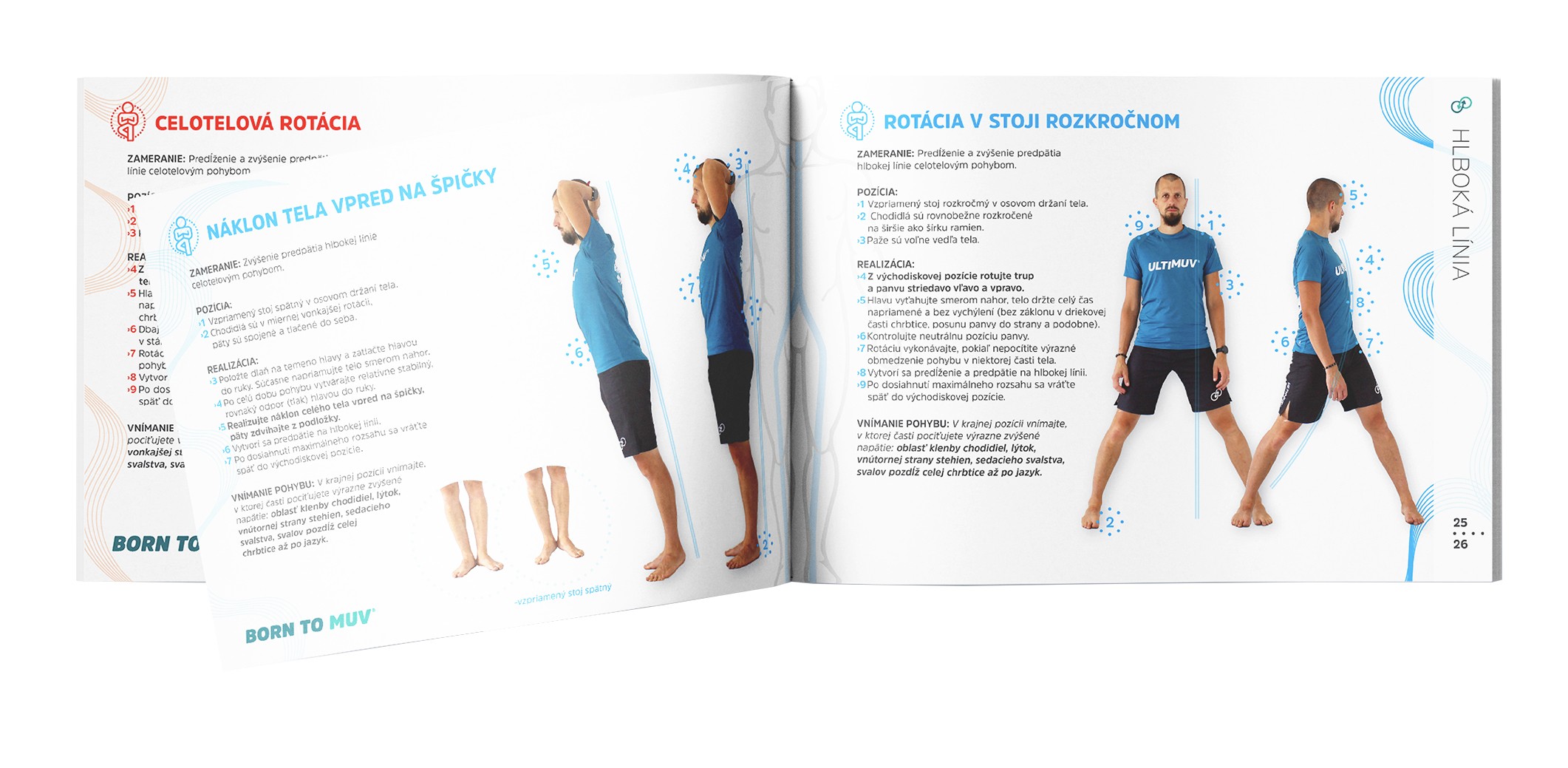
The key design challenge was synchronizing text and movement.
I focused on:
• Clear visual hierarchy to guide reading and exercise flow
• Consistent structure across all exercises
• Logical grouping based on myofascial lines
• Clean pairing of photography and instructions to make movement easy to follow
• Minimizing visual noise to keep attention on the body and motion
Rather than adding decorative elements, the design aimed to remove friction and support understanding.
Testing & Iteration
Once the full content draft was ready, we tested the guide with:
• Ultimuv clients
• People with no physiotherapy background
• Internal team members
• Professional physiotherapists and trainers
Feedback was consistently positive regarding usability and clarity. Most iterations focused on text refinement, simplifying language, clarifying instructions, and improving readability for non-experts.
After final adjustments, the guide was prepared for print and released to the public in summer 2020.
Outcome
• The guide was officially sold to the public as a lifestyle and movement supplement
• Used as a daily self-exercise tool by Ultimuv clients
• Successfully supported in-center training with at-home practice
• Received expert validation through a professional review by a PhD physiotherapist
• Led to the development of a second edition later in 2020
Expert Review
The guide was reviewed by a medical professional, providing independent expert validation of both its content and usability.
“Born To MUV presents complex knowledge about the musculoskeletal system in a clear and accessible way. The publication offers a practical, understandable form of self-therapy for posture-related pain and everyday movement limitations, while remaining grounded in professional physiotherapy principles.”
— Mgr. Marián Jendrichovský, PhD.
Learnings & Future Perspective
Learnings
This project reinforced the idea that design often acts as a translator between experts and everyday users. It taught me how to work with complex domains I didn’t fully understand at first, by asking the right questions, breaking concepts down, and prioritizing clarity over completeness.
Future Perspective
Born To MUV proved that well-designed printed tools still have strong value, especially when accessibility and usability matter. The second edition of the guide continued to refine clarity and structure, showing that even physical products benefit from iteration and user feedback.

Daniel Zubal
Born To MUV Publication
Client: Ultimuv
Year: 2020
Scope: Visual Design, Information Design
Read Time: 4 minutes
Overview: Born To MUV was a printed movement guide created at Ultimuv, a network of physiotherapy and sports centers in Slovakia. The goal of the project was to translate complex physiotherapy and myofascial training principles into a clear, usable format that everyday people could understand and apply on their own.
The publication was designed as a complementary tool to in-center training, helping clients continue exercising correctly at home, at work, or throughout the day without constant supervision.
I worked as the sole designer on the project, collaborating closely with the head physiotherapist, professional trainers, a marketing lead, and a copywriter.
The Problem
Ultimuv already worked with advanced physiotherapy concepts such as myofascial lines, tensegrity, and functional movement patterns. While these principles were effective in guided sessions, they were difficult to communicate outside the centers.
The main challenges were:
• High complexity: Expert-level physiotherapy knowledge was hard for non-professionals to understand.
• Limited transferability: Existing videos and materials did not explain the full system behind the exercises.
• Usability for everyday people: Clients needed a way to exercise correctly without a trainer present.
• Wide audience: The guide had to work for younger users as well as older people with lower digital confidence.
The core challenge was not creating new exercises, but making an expert system usable for the general public.
The Challenge
The goal was to design a movement guide that:
• Translates complex physiotherapy concepts into simple, human-readable language
• Clearly connects written instructions with body movement
• Works as a low-barrier tool for all age groups
• Supports daily use at home, at work, or during breaks
• Complements in-center training rather than replacing it
Why Print?
Choosing a printed format was a conscious design decision.
Print allowed us to:
• Launch quickly without the complexity of an app or platform
• Create a low-barrier tool accessible to older users
• Offer a distraction-free experience focused on movement
• Enable flexible use, users could keep the guide at home, at work, or photograph pages for mobile use
The printed guide became the most inclusive format for the widest audience.
Research & Collaboration
The exercise system itself was developed by Ultimuv’s team of physiotherapists and professional trainers, based on the Anatomy Trains methodology by Tom Myers.
My role within the team was to:
• Continuously question clarity and comprehensibility
• Translate expert language into visually and structurally understandable content
• Acknowledge where non-expert users might get confused or misinterpret instructions
This required close collaboration between design, marketing, copywriting, and physiotherapy experts throughout the project.
Design & Information Structure
The key design challenge was synchronizing text and movement.
I focused on:
• Clear visual hierarchy to guide reading and exercise flow
• Consistent structure across all exercises
• Logical grouping based on myofascial lines
• Clean pairing of photography and instructions to make movement easy to follow
• Minimizing visual noise to keep attention on the body and motion
Rather than adding decorative elements, the design aimed to remove friction and support understanding.
Testing & Iteration
Once the full content draft was ready, we tested the guide with:
• Ultimuv clients
• People with no physiotherapy background
• Internal team members
• Professional physiotherapists and trainers
Feedback was consistently positive regarding usability and clarity. Most iterations focused on text refinement, simplifying language, clarifying instructions, and improving readability for non-experts.
After final adjustments, the guide was prepared for print and released to the public in summer 2020.
Outcome
• The guide was officially sold to the public as a lifestyle and movement supplement
• Used as a daily self-exercise tool by Ultimuv clients
• Successfully supported in-center training with at-home practice
• Received expert validation through a professional review by a PhD physiotherapist
• Led to the development of a second edition later in 2020
Expert Review
The guide was reviewed by a medical professional, providing independent expert validation of both its content and usability.
“Born To MUV presents complex knowledge about the musculoskeletal system in a clear and accessible way. The publication offers a practical, understandable form of self-therapy for posture-related pain and everyday movement limitations, while remaining grounded in professional physiotherapy principles.”
— Mgr. Marián Jendrichovský, PhD.
Learnings & Future Perspective
Learnings
This project reinforced the idea that design often acts as a translator between experts and everyday users. It taught me how to work with complex domains I didn’t fully understand at first, by asking the right questions, breaking concepts down, and prioritizing clarity over completeness.
Future Perspective
Born To MUV proved that well-designed printed tools still have strong value, especially when accessibility and usability matter. The second edition of the guide continued to refine clarity and structure, showing that even physical products benefit from iteration and user feedback.
Daniel Zubal
Born To MUV Publication
Client: Ultimuv
Year: 2020
Scope: Visual Design, Information Design
Read Time: 4 minutes
Overview: Born To MUV was a printed movement guide created at Ultimuv, a network of physiotherapy and sports centers in Slovakia. The goal of the project was to translate complex physiotherapy and myofascial training principles into a clear, usable format that everyday people could understand and apply on their own.
The publication was designed as a complementary tool to in-center training, helping clients continue exercising correctly at home, at work, or throughout the day without constant supervision.
I worked as the sole designer on the project, collaborating closely with the head physiotherapist, professional trainers, a marketing lead, and a copywriter.
The Problem
Ultimuv already worked with advanced physiotherapy concepts such as myofascial lines, tensegrity, and functional movement patterns. While these principles were effective in guided sessions, they were difficult to communicate outside the centers.
The main challenges were:
• High complexity: Expert-level physiotherapy knowledge was hard for non-professionals to understand.
• Limited transferability: Existing videos and materials did not explain the full system behind the exercises.
• Usability for everyday people: Clients needed a way to exercise correctly without a trainer present.
• Wide audience: The guide had to work for younger users as well as older people with lower digital confidence.
The core challenge was not creating new exercises, but making an expert system usable for the general public.
The Challenge
The goal was to design a movement guide that:
• Translates complex physiotherapy concepts into simple, human-readable language
• Clearly connects written instructions with body movement
• Works as a low-barrier tool for all age groups
• Supports daily use at home, at work, or during breaks
• Complements in-center training rather than replacing it
Why Print?
Choosing a printed format was a conscious design decision.
Print allowed us to:
• Launch quickly without the complexity of an app or platform
• Create a low-barrier tool accessible to older users
• Offer a distraction-free experience focused on movement
• Enable flexible use, users could keep the guide at home, at work, or photograph pages for mobile use
The printed guide became the most inclusive format for the widest audience.
Research & Collaboration
The exercise system itself was developed by Ultimuv’s team of physiotherapists and professional trainers, based on the Anatomy Trains methodology by Tom Myers.
My role within the team was to:
• Continuously question clarity and comprehensibility
• Translate expert language into visually and structurally understandable content
• Acknowledge where non-expert users might get confused or misinterpret instructions
This required close collaboration between design, marketing, copywriting, and physiotherapy experts throughout the project.
Design & Information Structure
The key design challenge was synchronizing text and movement.
I focused on:
• Clear visual hierarchy to guide reading and exercise flow
• Consistent structure across all exercises
• Logical grouping based on myofascial lines
• Clean pairing of photography and instructions to make movement easy to follow
• Minimizing visual noise to keep attention on the body and motion
Rather than adding decorative elements, the design aimed to remove friction and support understanding.
Testing & Iteration
Once the full content draft was ready, we tested the guide with:
• Ultimuv clients
• People with no physiotherapy background
• Internal team members
• Professional physiotherapists and trainers
Feedback was consistently positive regarding usability and clarity. Most iterations focused on text refinement, simplifying language, clarifying instructions, and improving readability for non-experts.
After final adjustments, the guide was prepared for print and released to the public in summer 2020.
Outcome
• The guide was officially sold to the public as a lifestyle and movement supplement
• Used as a daily self-exercise tool by Ultimuv clients
• Successfully supported in-center training with at-home practice
• Received expert validation through a professional review by a PhD physiotherapist
• Led to the development of a second edition later in 2020
Expert Review
The guide was reviewed by a medical professional, providing independent expert validation of both its content and usability.
“Born To MUV presents complex knowledge about the musculoskeletal system in a clear and accessible way. The publication offers a practical, understandable form of self-therapy for posture-related pain and everyday movement limitations, while remaining grounded in professional physiotherapy principles.”
— Mgr. Marián Jendrichovský, PhD.
Learnings & Future Perspective
Learnings
This project reinforced the idea that design often acts as a translator between experts and everyday users. It taught me how to work with complex domains I didn’t fully understand at first, by asking the right questions, breaking concepts down, and prioritizing clarity over completeness.
Future Perspective
Born To MUV proved that well-designed printed tools still have strong value, especially when accessibility and usability matter. The second edition of the guide continued to refine clarity and structure, showing that even physical products benefit from iteration and user feedback.